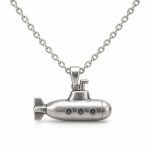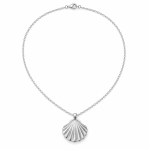

One supplier quotes USD 4.20 per piece. Another quotes USD 4.80. Which offer is better? You cannot answer from those two figures alone. Useful wholesale jewelry pricing comparisons start with the same product specification and end with the full cost of receiving the order.
A quoted necklace may include a chain, while another offer covers only the pendant. Packaging, delivery and development work can also sit outside the headline price.
Compare the same product before comparing money
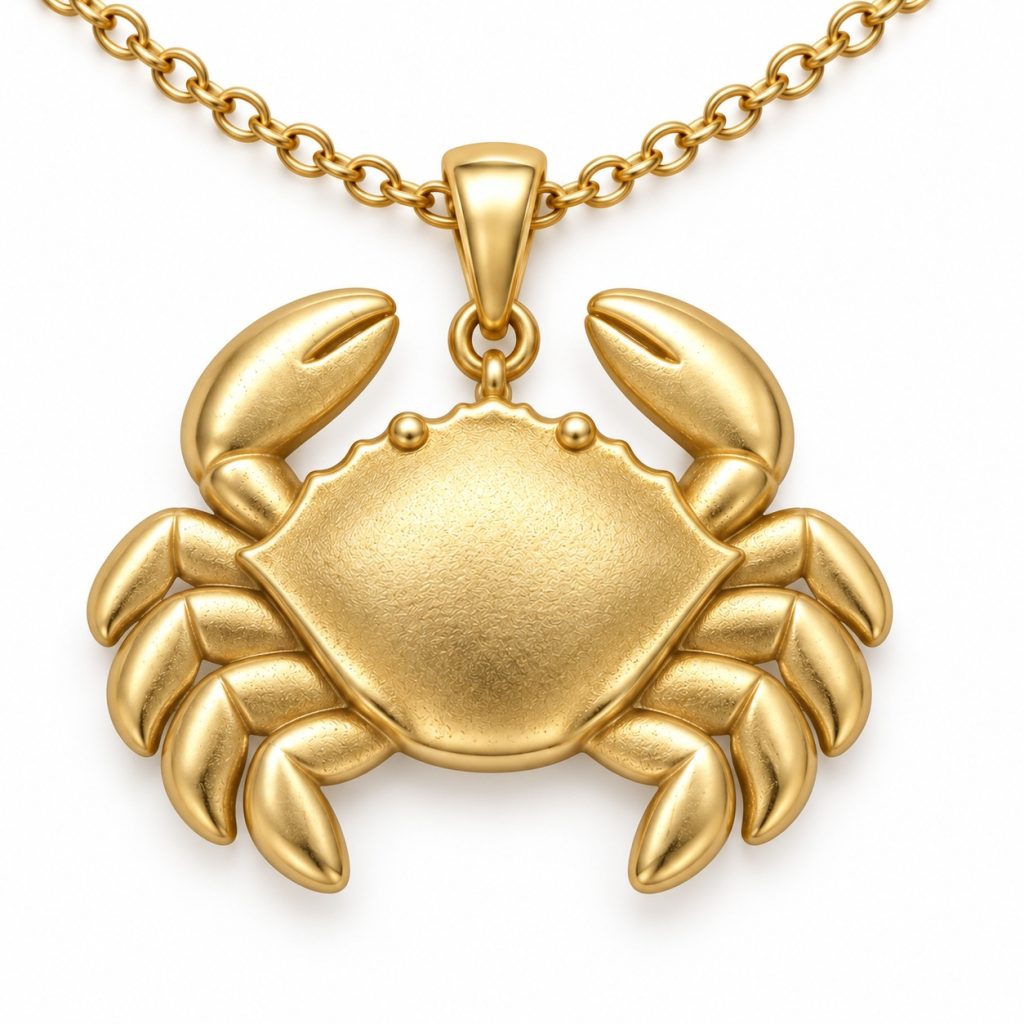
Put the material, finish, dimensions, order quantity and included components beside each offer. For example, Lumabara’s gold-plated crab pendant page states that chain inclusion and specifications are confirmed separately. A photograph showing a chain does not make two necklace quotations equivalent.
Be just as precise with earrings. Compare a pair with a pair, including the agreed posts and backs. For a bracelet, compare the same construction and dimensions rather than grouping a chain bracelet and a rigid bangle under one unit price.
Build a delivered-order cost sheet
Shopify’s explanation of landed cost highlights the need to consider transportation and other delivery-related expenses alongside the goods. For a practical buying worksheet, record the product amount, agreed packing charges, freight, insurance where applicable and confirmed import or handling charges.
Keep retail selling expenses, such as advertising and customer delivery, in a separate section. State which taxes and charges are included so that every supplier is being compared on the same basis.
A worked comparison
This illustration assumes 300 equivalent retail units with the same agreed specification. All numbers are invented for the example; they are not Lumabara prices or shipping estimates.
| Order item, USD | Quote A | Quote B |
|---|---|---|
| Product price per unit | 4.20 | 4.80 |
| Products: 300 units | 1,260 | 1,440 |
| Agreed packaging | 120 | Included |
| Freight | 210 | 150 |
| Assumed other delivery charges | 90 | 90 |
| Total in this example | 1,680 | 1,680 |
| Cost per ordered retail unit | 5.60 | 5.60 |
The lower piece price does not produce a lower order total here. This does not establish that either supplier is better: sample quality, communication and suitability remain separate questions.
Separate first-order development from repeat orders
For an original design, request a separate line for agreed drawing, tooling and sampling work. Ask which costs repeat and which apply only when specifications change. Do not spread a one-time charge across a hoped-for lifetime order volume and present that as your actual first-order cost.
For example, a hypothetical USD 300 setup charge adds USD 1.00 per unit to a 300-unit first order. It would not automatically apply again to an identical reorder, but the supplier must confirm that assumption. Record ownership, retention and reuse arrangements for project files or tooling in the development agreement rather than assuming them.
Track the difference between ordered and saleable stock
Record what arrives, what is accepted and anything held for review. If some units cannot be sold, report that separately and resolve it with the supplier. Do not quietly treat the full ordered quantity as available inventory.
Likewise, do not label the difference between retail price and purchase price as final profit. Selling fees, packing, returns, discounts and operating expenses still affect the result. Your buying worksheet should help you see costs clearly, not promise a particular margin.
Ask for a quotation you can compare
Lumabara’s displayed product prices are indicative; final pricing depends on confirmed specifications and quantity, and shipping is quoted separately. Use our packaging and labeling article to define what must be included. Then request a wholesale quotation with the selected product links, quantity for each option, delivery country and postal code.