

Wholesale animal rings need product information that explains the sculpture as well as the ring size. A close-up can make a motif look impressive, but a shopper still needs to understand its scale, side profile and position on the hand.
For retailers buying metal statement rings, a clear presentation can answer those questions before a customer asks them. The goal is to show the design accurately across the product page, display tray and staff reference sheet.
Give each motif an accurate place in the collection
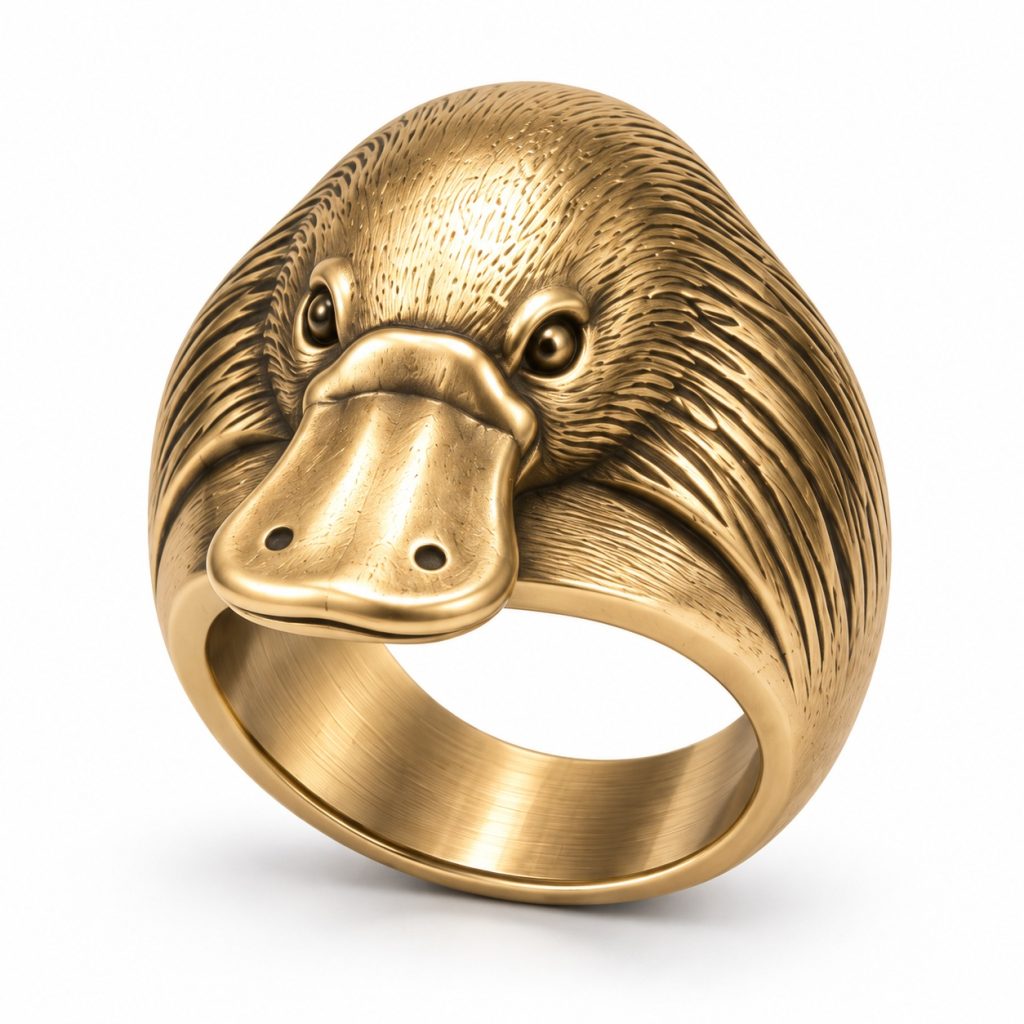
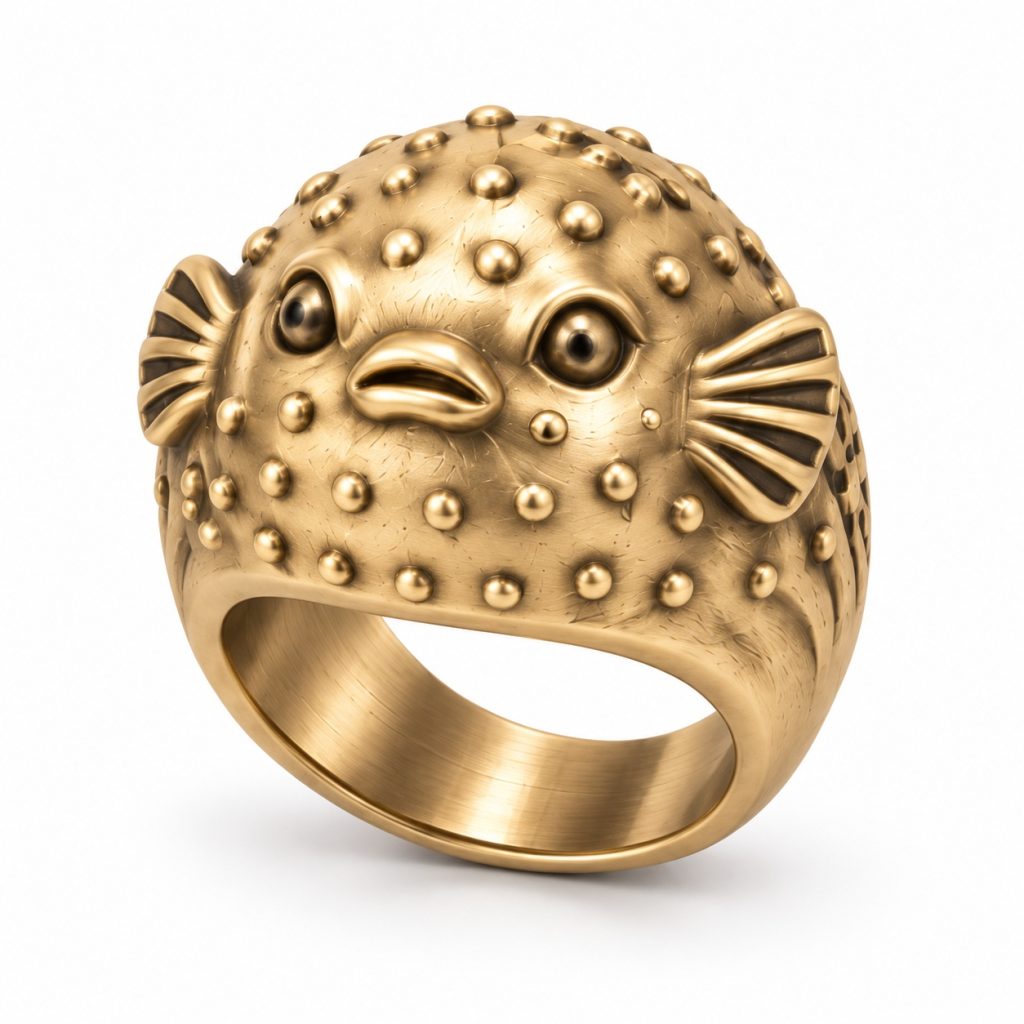
Consider two distinct designs: Lumabara’s Gold-Plated Textured Pufferfish Ring and Gold-Plated Textured Platypus Ring.
The pufferfish design uses rounded surface details and fins, while the platypus design emphasizes a broad bill and fur-inspired texture. Those features give each product a different visual story. A shop might place the first in a sea-life selection and the second in an Australian wildlife collection, depending on its audience.
Do not use “ocean animal” as a catch-all name for every nature-inspired product. Accurate motif naming helps customers find the piece they mean and prevents unrelated animal keywords from overwhelming the listing.
Use three images to answer three questions
Plan a small gallery with a distinct purpose for each photograph:
| Image | Customer question it answers |
|---|---|
| Front view | What animal and surface details am I looking at? |
| Side or three-quarter view | How high does the motif sit, and how does it join the band? |
| Scale or wearing view | How large does the piece appear in context? |
Keep light, color and exposure reasonably consistent. A side view should not make the finish look like a different color option. Include a separate measurement photograph when needed, using the actual item rather than trying to infer dimensions from a model’s hand.
If a gallery uses a design visualization, identify it as such. It can explain a proposed appearance, but should not be presented as evidence of a measured production sample.
Write beyond “unique” and “beautiful”
Useful descriptions identify what a shopper can see. For a pufferfish ring, that may be the raised dot pattern and the relationship between the fins and ring face. For a platypus ring, it may be the smoother bill against the textured face.
Then explain the less visible facts using confirmed specifications: band width, motif dimensions, material, finish and available sizes. Separate those facts from subjective styling language.
A helpful description order is: animal motif, visible design detail, material and finish, measurements, then ordering options. Avoid using the same paragraph with only the animal name changed. The products differ, so the information worth emphasizing should differ too.
Let the tray show differences instead of hiding them
Arrange sample rings so their faces point in a consistent direction. Leave enough space for broad motifs, and place the product code and available size information where staff can read it without lifting every piece.
Try comparing two display versions: one densely filled and one with a smaller selection and clearer labels. Record which setup prompts more useful product questions and makes it easier to find a requested size. Treat this as a store experiment, not a promise that one layout will increase sales.
If bracelets appear in the same cabinet, separate their fit information from ring sizing. Our bracelet and bangle fit guide explains the measurements needed for those products.
Keep the product page and order sheet aligned
Use the same product code, finish name and size system in the display, online listing and purchase request. Do not advertise every pictured variation as available until it has been confirmed for that design.
Explore the Lumabara ring collection to build a shortlist with visibly different profiles. When you request wholesale pricing, include each product link and the images or measurements you need for your retail listing. That gives the discussion a concrete purpose beyond selecting an attractive photograph.
[…] For additional ideas on presenting sculptural pieces, read our article on wholesale animal rings and retail presentation. […]
[…] or metal rings to build a shortlist. For help showing sculptural pieces accurately, read our animal ring presentation article. Send your preferred designs, quantities per option and delivery country through our wholesale […]