

Buying wholesale pendant necklaces involves two decisions: choosing the decorative piece and defining the necklace that carries it. A pendant-only offer and a finished necklace are different products, even when their photographs show the same chain.
A clear assembly brief helps a retailer compare quotations and describe the delivered item accurately. It also leaves less room for last-minute decisions about chain style, length or included components.
Decide what the customer will receive
Before comparing prices, choose the required supply format: pendant only, pendant with a separate chain, or a fully assembled necklace. If the chain is supplied separately, specify whether your store or the supplier will assemble the final retail unit.
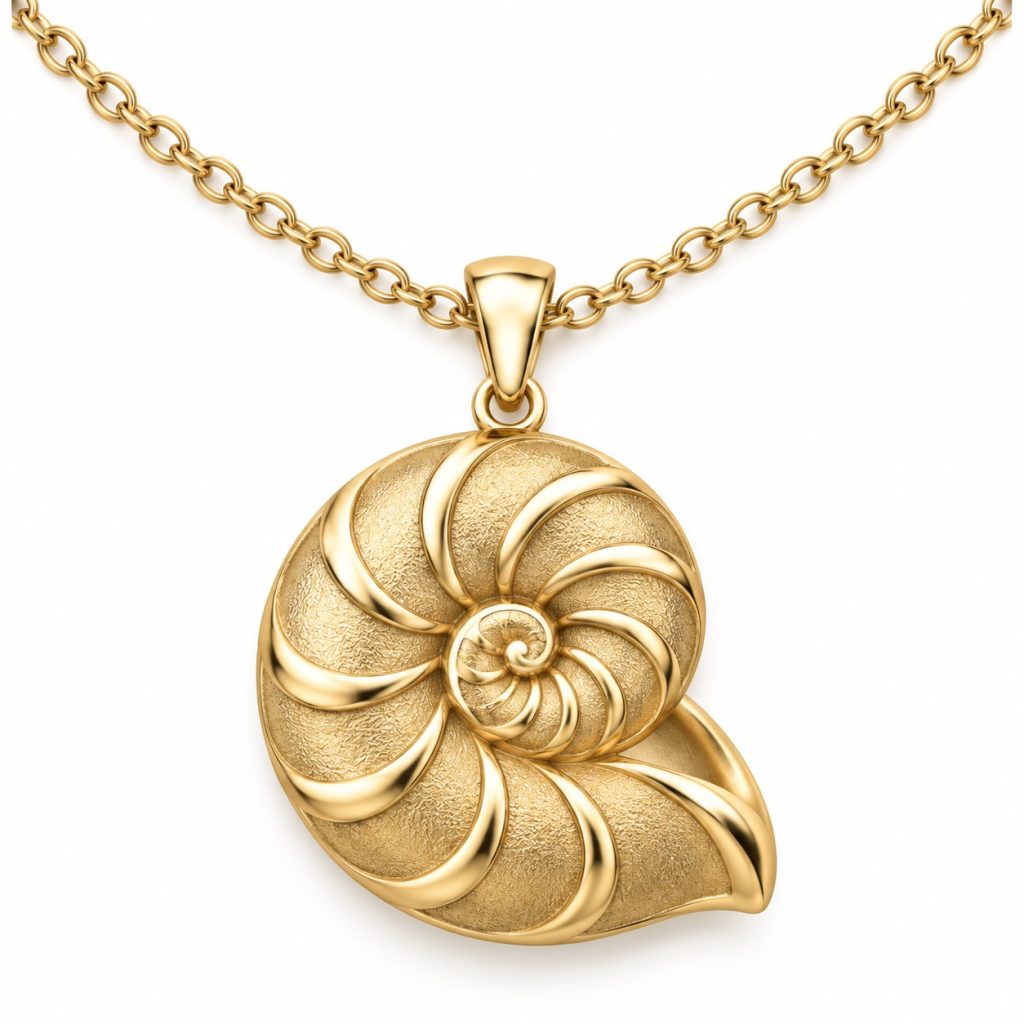
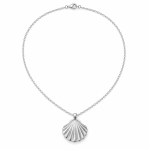
The Gold-Plated Nautilus Shell Pendant illustrates why this distinction matters. Its product description states that the pictured chain is for styling and that inclusion is confirmed separately. Keep that distinction in your buying notes instead of assuming that everything in a photograph is included.
For a finished necklace, ask for a component list covering the pendant, chain, clasp, connecting rings and any extender.
Check the whole connection path
A chain must work with the pendant’s attachment point, often called a bail. Comparing only the chain’s link width is not enough: an end fitting or clasp may be wider than the links themselves.
Ask how the necklace is assembled and whether the pendant is intended to be removable. If removability is part of your retail offer, have the supplier demonstrate it with the exact chain and pendant combination. If it is permanently assembled, describe it that way.
Useful questions include:
- Can the required chain end pass through the attachment opening?
- Does the pendant move freely without twisting its connector?
- Does the attachment point leave the intended face visible?
- Are the connecting parts included in the quotation?
These questions define the assembly; they do not replace a physical sample review.
Compare how different pendant shapes hang
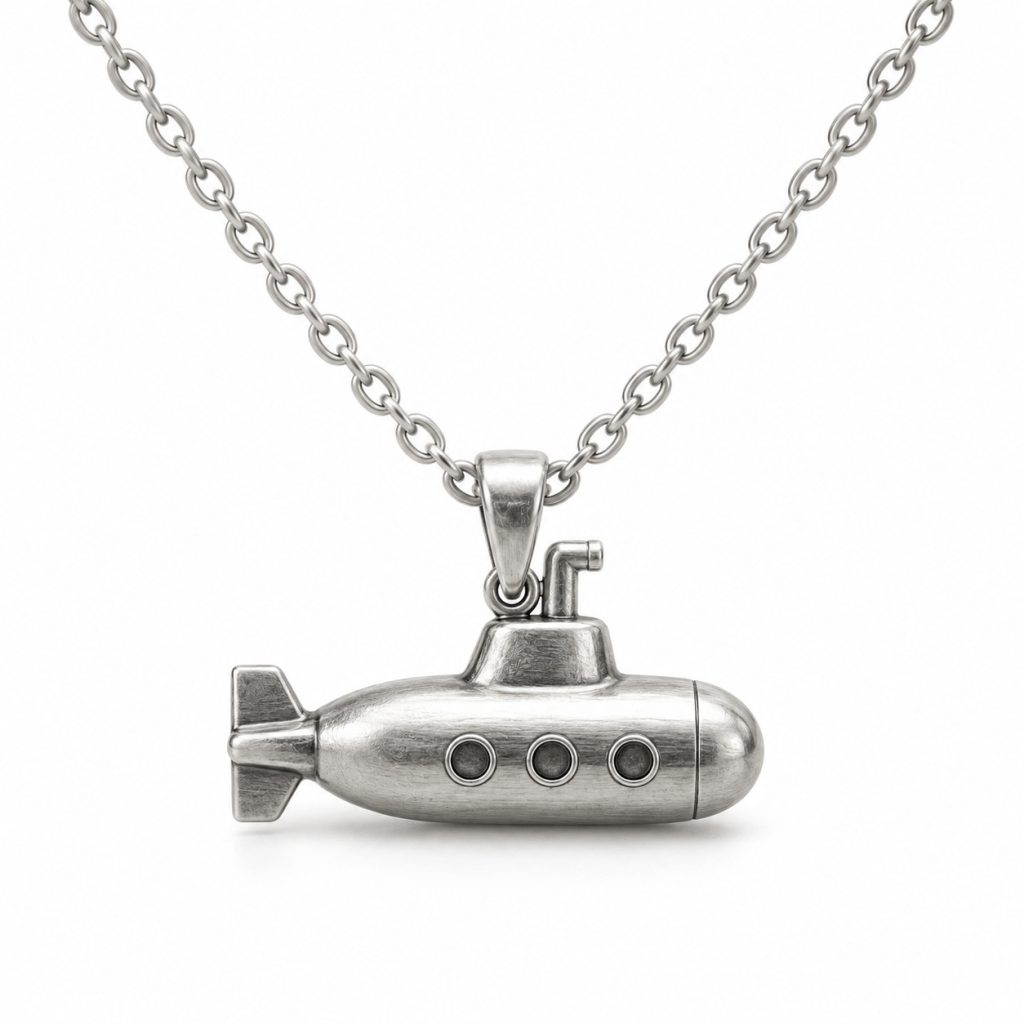
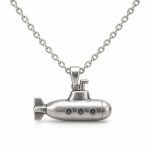
A spiral shell and an elongated nautical motif do not occupy the same space. The nautilus design emphasizes a rounded form, while the Silver-Plated Submarine Pendant Necklace uses a side-profile hull and recessed porthole details.
Photograph the proposed combination hanging vertically, not only lying flat. Check which direction the pendant faces, whether the chain obscures a detail and whether the attachment point causes the piece to lean. Keep the chain configuration unchanged while comparing alternative pendants; otherwise, two variables change at once.
Do not promise that a pendant will always remain centered based on a single styled image.
Define chain length and finish precisely
Specify how length is measured, whether the clasp is included in that measurement and whether an extender adds to the stated length. Use the same method in your order sheet and customer listing.
| Order field | Detail to confirm |
|---|---|
| Pendant | Product link, dimensions and selected finish |
| Chain | Link style, width, material and measured length |
| Clasp | Type, material and how it is included in the length |
| Extender | Included or not; additional length if supplied |
| Assembly | Pendant-only, separate components or assembled necklace |
For plated pieces, compare the chain and pendant together under consistent light. A shared color name does not guarantee an exact visual match. Record the agreed appearance without describing a gold-tone or silver-tone item as solid precious metal.
Use the same configuration in your listing and quotation
If you offer more than one chain length, give each configuration a clear order line. Show the actual supplied combination in the product gallery and explain any selectable options. An image styled with a different chain should be identified as a styling example.
Retailers also purchasing earrings can use our flat back stud specification guide to apply the same component-by-component approach to fronts, posts and backs.
Explore Lumabara’s necklace collection and request a quotation with your selected pendant links, required chain configuration and quantity for each option.
[…] same principle applies to neckwear: our pendant and chain specification guide explains how to identify length, clasp and component differences in a complete […]