

When buying wholesale flat back stud earrings, a product name rarely tells you enough to compare two offers. The decorative front, post, rear disc and selling unit all need their own description. Two sea-life studs can look similar in a photograph while arriving with different components or dimensions.
For a retailer, the useful question is not simply whether a design looks attractive. It is whether the item can be ordered, identified and explained consistently. Here is how to turn a small marine-animal stud into a clear product specification.
Treat the front, post and back as separate parts
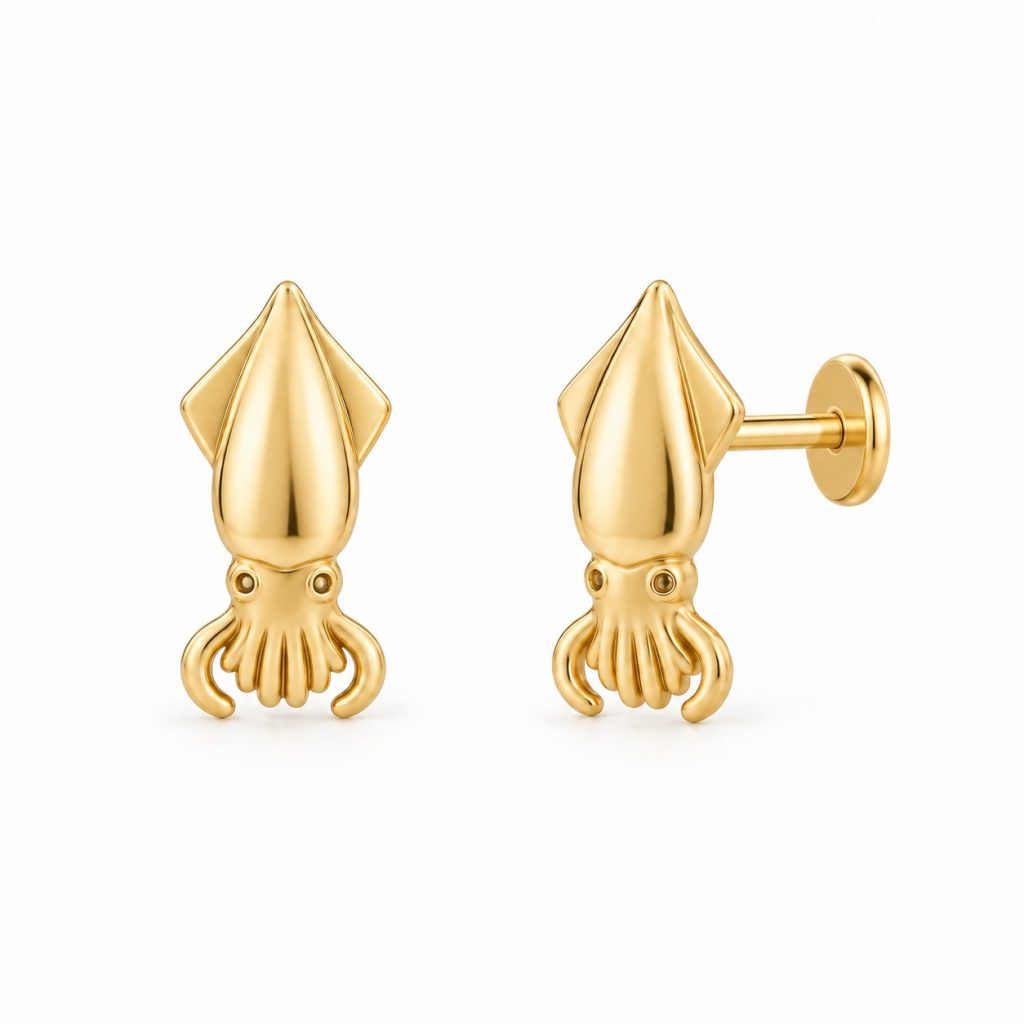
Start by asking for an annotated side-view photograph or drawing. Identify the decorative front, the wearable section of the post and the rear disc. Request the material of each component rather than applying the front’s finish description to the entire assembly.
Lumabara’s Squid Flat Back Stud Earrings use a pointed squid motif and a circular flat back. Those visible design features help identify the style, but they do not establish the connection mechanism. Confirm how the front attaches, which parts detach and whether replacement components are compatible with the quoted version.
Avoid treating different suppliers’ flat-back parts as interchangeable without confirmation.
Do not confuse front size with post length
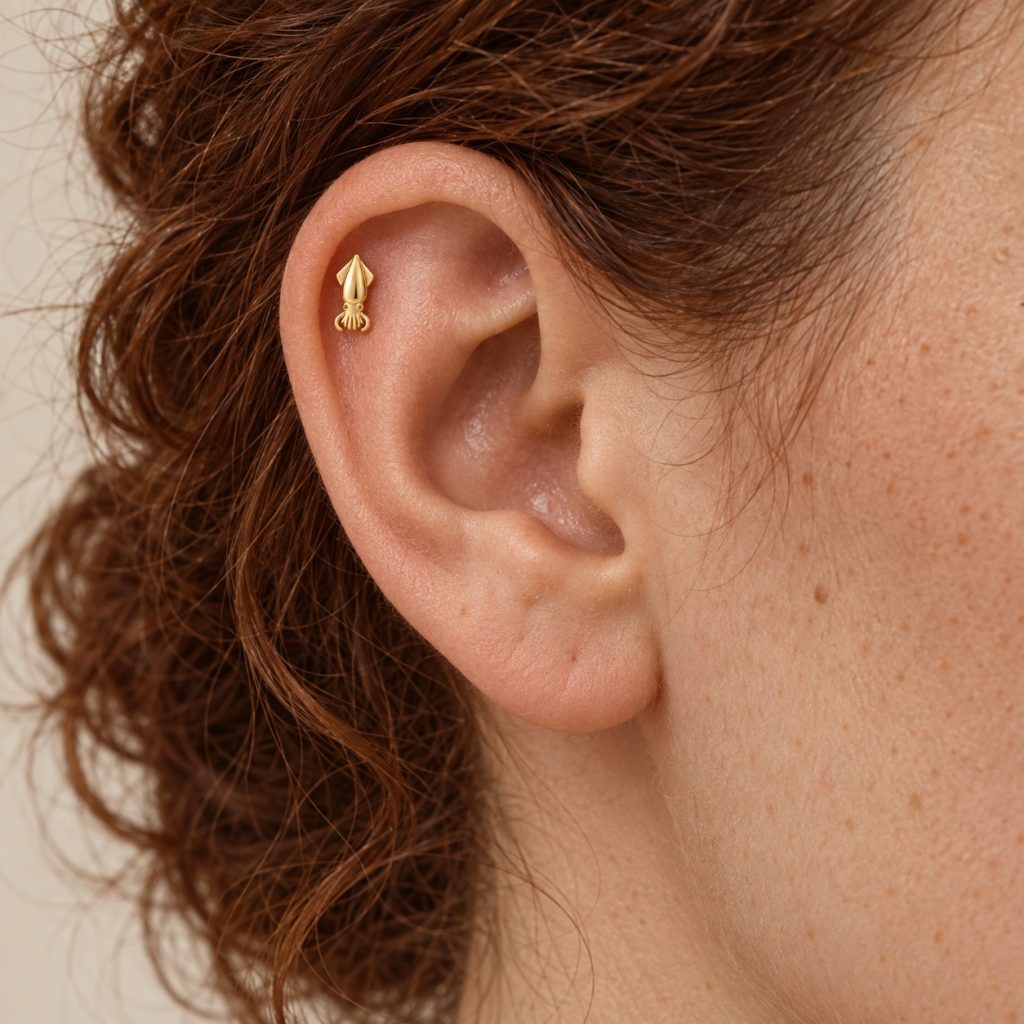
A dimension such as “8 mm” needs a label. It might refer to the decorative front’s height, its width or the length of a post. A buyer cannot use one measurement as a substitute for another.
Ask for the following information in a small drawing:
| Measurement | What it should describe |
|---|---|
| Front height and width | The complete decorative outline, including fins or arms |
| Front thickness | How far the motif projects forward |
| Wearable post length | The supplier-defined section between the assembled front and back |
| Post diameter | The thickness of the post |
| Rear-disc diameter | The width of the flat back |
Keep the measurement points visible. If a supplier uses total post length instead of wearable length, ask them to distinguish the two. Do not estimate these measurements from a wearing image.
Review animal shapes at the intended scale
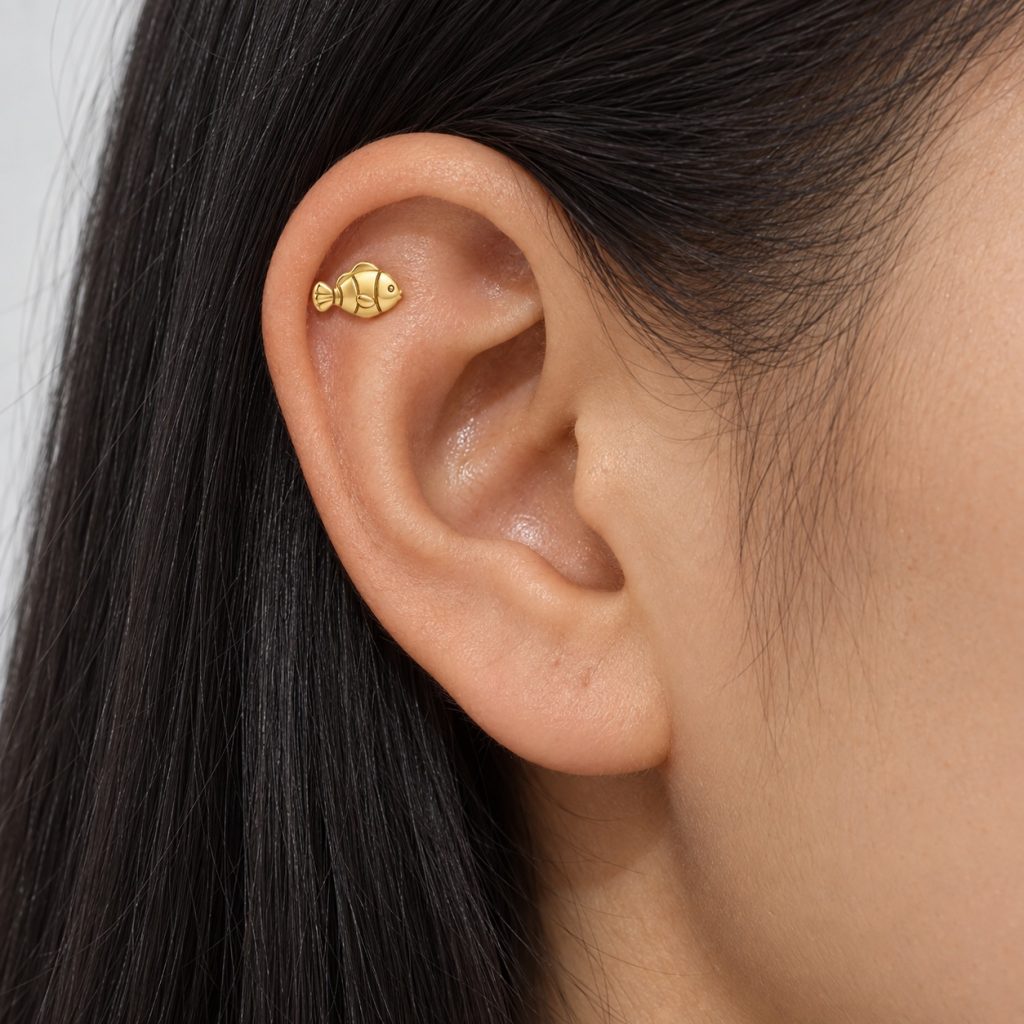
The Clownfish Flat Back Stud Earrings provide a second motif to compare with the squid design. Assess each sample at normal viewing distance as well as in a close-up photograph.
For a compact fish, ask whether the body outline and fin shapes remain readable. For a squid, check whether the mantle and arm details remain distinct. The aim is to preserve the animal’s identity without depending on extreme magnification.
Also compare the two fronts in a pair. Record whether they are identical or mirrored and how they are intended to face when worn. A matching pair and a mirrored pair are different specifications; neither should be left to assumption.
Make the selling unit explicit
Write “pairs” or “individual earrings” beside every quantity and price. For example, a request for 40 pairs means 80 individual earrings, with the agreed backs included. This example illustrates unit counting, not an order minimum.
Your order line should identify the motif, material option, finish, front dimensions, post specification, back type and number of pairs. Ask how minimum quantities apply to each option before dividing the order into multiple sizes.
For retail listings, keep fastening instructions separate from styling suggestions. A flat back alone does not establish suitability for a particular piercing placement or for newly pierced ears. Use confirmed product information rather than making a broad comfort or sensitivity claim.
Give the retail team a useful product record
Keep one front image, one side image and one component diagram for the approved version. Add the product code, selling unit and supplier-confirmed care information. This makes it easier to answer questions about what is included without opening every pack.
For the broader inspection process, use our wholesale metal jewelry sample checklist. To discuss squid, clownfish or other sea-life studs, send Lumabara an inquiry with the product links, requested pairs and component details you need confirmed.
[…] also purchasing earrings can use our flat back stud specification guide to apply the same component-by-component approach to fronts, posts and […]
[…] format-specific preparation, use our guides to flat back stud components, pendant and chain assemblies, and bracelet fit measurements. The animal ring presentation guide […]
[…] For a more detailed specification framework, see our wholesale flat back stud earrings article. […]